
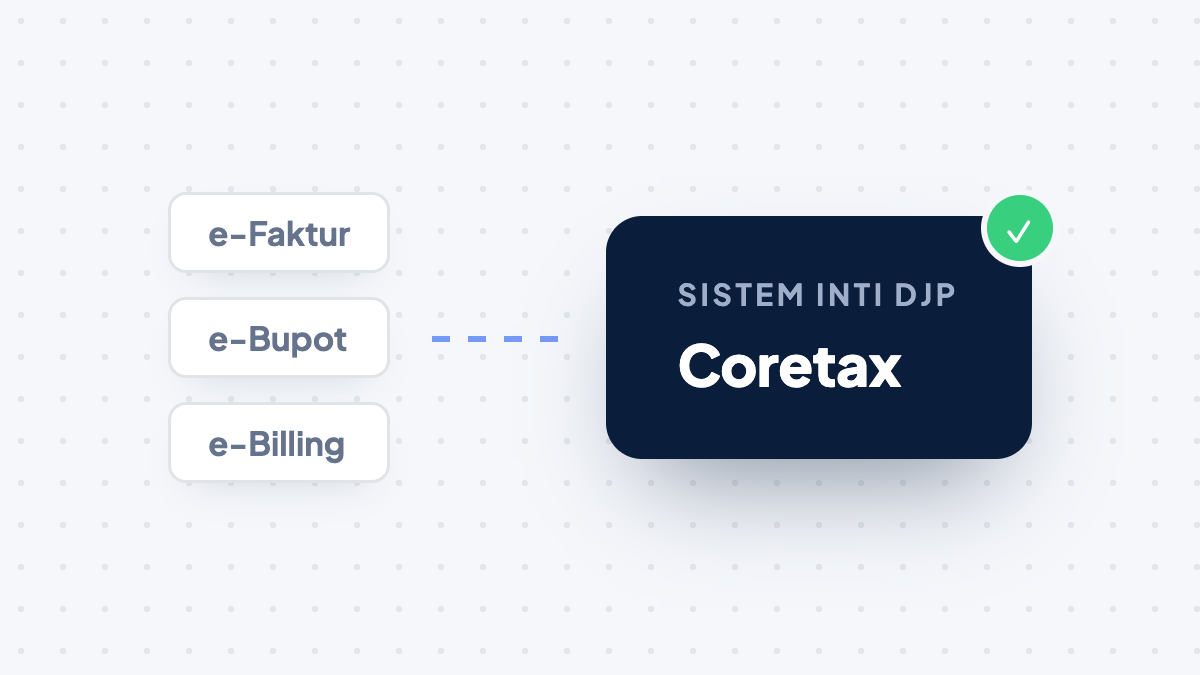
Coretax is the core tax administration system replacing the various DJP applications that previously ran separately, including e-Faktur and e-Bupot. For companies with large transaction volumes, the change is more than a new interface: invoice issuance flows, integration channels, and data formats change with it.
This article summarizes the changes that matter most to corporate tax teams and the adjustments worth preparing now.
Invoice issuance flow changes
Under the previous system, output invoices were created in the e-Faktur desktop or web application, then uploaded for DJP approval. In Coretax, the full invoice lifecycle — creation, signing, and reporting — runs inside one system. Invoice serial numbers are no longer requested separately; numbering follows a new system-issued scheme.
As a consequence, internal procedures built around serial-number allocations need review, including internal approval controls before an invoice is issued.
New H2H channel and data format
For companies connected through a PJAP, the host-to-host (H2H) channel remains available — but its technical specification changes, including an XML-based exchange format with a different field structure from the old scheme. Mapping ERP fields (SAP, Oracle, Odoo, Accurate) to the new schema is the largest technical task in this transition.
Pajak.io customers do not need to remap on their own — schema adjustments for Coretax are handled on the platform side, so existing ERP integrations keep working.
Adjustment checklist
Items worth adding to the tax and IT team checklist:
- Complete NIK-NPWP matching for all counterparties — unmatched data will block document issuance.
- Inventory internal processes that depend on the old invoice serial numbers.
- Test issuance flows in a sandbox before moving full volume.
- Agree on error handling and retries between the ERP, PJAP, and DJP upfront.
Conclusion
National tax system transitions always bring an adjustment period. The companies least disrupted are the ones that shift the technical burden to a platform whose job is to keep up — so the tax team can focus on compliance, not XML specifications.
Want to understand Coretax's impact on your company's e-Faktur flow? Talk to our team — it's free.